Tech Is 20% Tech

There’s a lot of anxiety in the tech industry right now, and honestly, I get it.
AI is changing how work gets done faster than most of us can keep up with. Code is cheaper to write than it’s ever been. Entry-level roles are getting squeezed. Every week there’s a new headline about some tool that can do what used to take a whole team. If you’re early in your career, or thinking about getting into tech, it’s fair to wonder where you fit.
I don’t have all the answers. I’m still pretty early in my own career. But there’s one lesson that has made me better at every role I’ve had in tech, and I think it matters more right now than it ever has.
It’s this: the best thing you can do in tech is talk to people.
The industry is shifting under our feet

Let’s be real about what’s happening. AI is good at a lot of things now. It can write code, summarize documents, draft emails, and answer technical questions in seconds. That’s genuinely exciting. Small teams can build things that used to require entire departments, and a lot of tedious work is disappearing.
But it cuts both ways. A lot of the work that people used to learn on, the junior tasks that built your skills over time, is exactly the work AI is getting good at. That makes the traditional path into tech feel a lot less certain than it did even a few years ago.
What I keep noticing, though, is what AI isn’t doing. It isn’t sitting across from a business owner who’s frustrated and can’t quite explain why. It isn’t noticing that the thing someone asked for isn’t the thing they need. It isn’t building the kind of trust that makes someone say “okay, I believe you, let’s do it.”
That’s where I think a lot of the opportunity is going.
Talk to people first

I’ve had a few different roles in tech so far. I led TUDev, a student developer organization at Temple. I’ve done in-home installs with Geek Squad. Now I work in sales at an MSP, running discovery calls with businesses to figure out what they need.
Those are pretty different jobs. But the same thing kept proving true in all of them:
The problem people describe is rarely the real problem.
Someone says they need a new laptop. What they actually need is to stop losing twenty minutes every morning fighting with their setup. A company says they need a new system. What they actually need is for two teams to stop working around each other.
You only find that out by asking questions. By listening more than you talk. By being genuinely curious about how people work, what frustrates them, and what “fixed” would actually look like for them.
No amount of technical skill makes up for solving the wrong problem well. I’ve seen really talented people build impressive things that nobody ended up using, because nobody stopped to ask the right questions up front.
What leading TUDev taught me
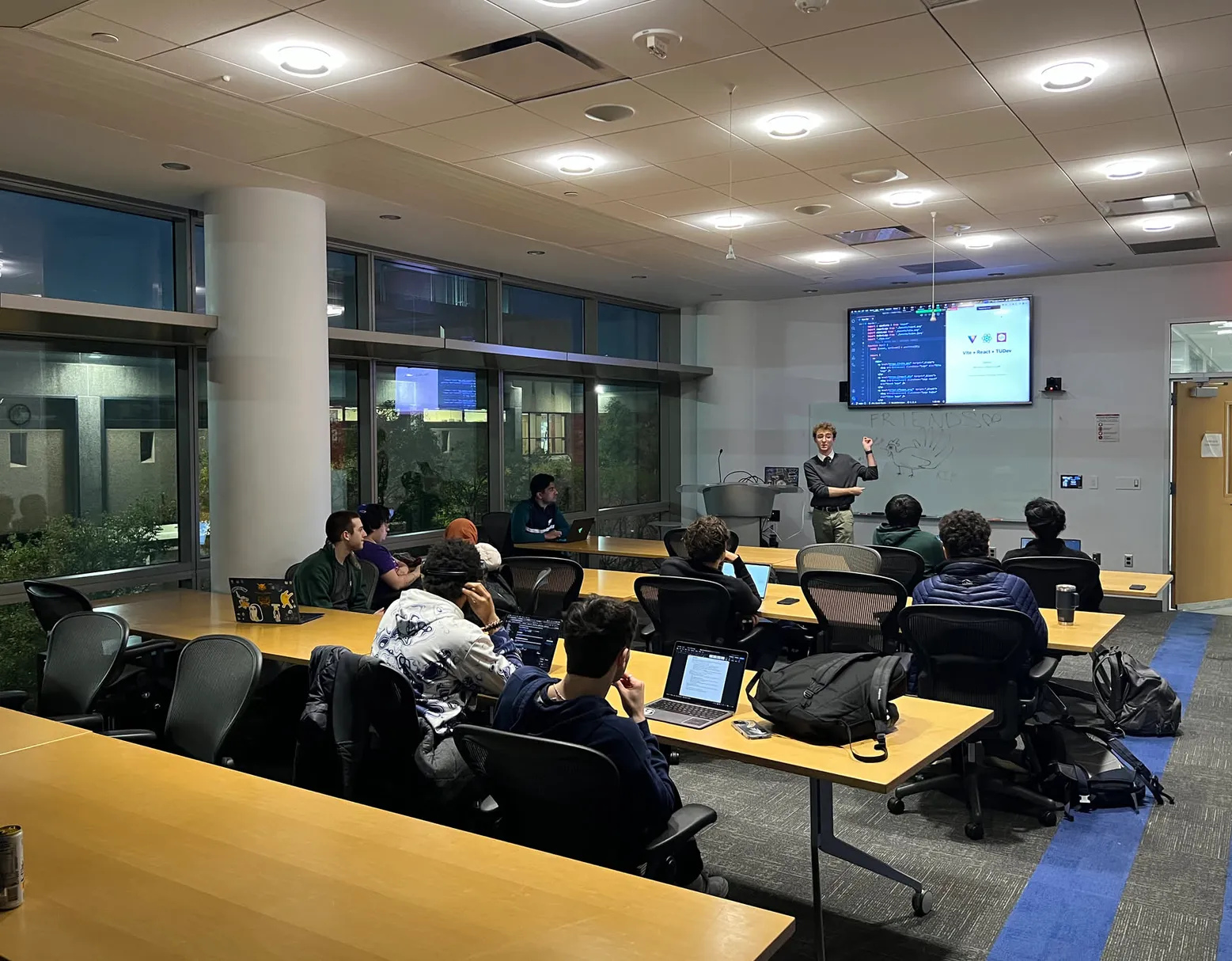
When I was President of TUDev, I assumed the job would be mostly technical. Organizing workshops, helping people with projects, keeping up with new tools.
Some of it was. But most of it was people. Figuring out why members didn’t get the workshop. Understanding what members actually wanted to get out of the org, versus what we assumed they wanted. Getting a group of busy students with different goals to pull in the same direction.
That was the first time I really understood that leading in tech isn’t about being the most technical person in the room. It’s about understanding the people in it.
Not every tech job is technical all the time
 When most people picture a career in tech, they picture someone writing code all day. That’s one path, and it’s a great one. But it’s not the only one, and I think a lot of people don’t realize how many roles in this industry sit right where technology meets people.
Think about:
- Sales: understanding a client’s problem well enough to recommend the right solution
- Project management: keeping technical and non-technical people aligned on the same goal
- Consulting: translating business needs into technical plans
- Support and training: helping people actually use what was built
- Account management: building long-term trust with clients
All of these need technical knowledge. You have to understand what’s possible and speak the same language as the engineers. But none of them live in the technical side every hour of the day.
My degree is in Information Science & Technology, and it absolutely helps me every day. It lets me understand what our technical team is talking about and ask smarter questions on calls. But most of my day is spent understanding people, not configuring systems.
The 80/20 rule I keep coming back to
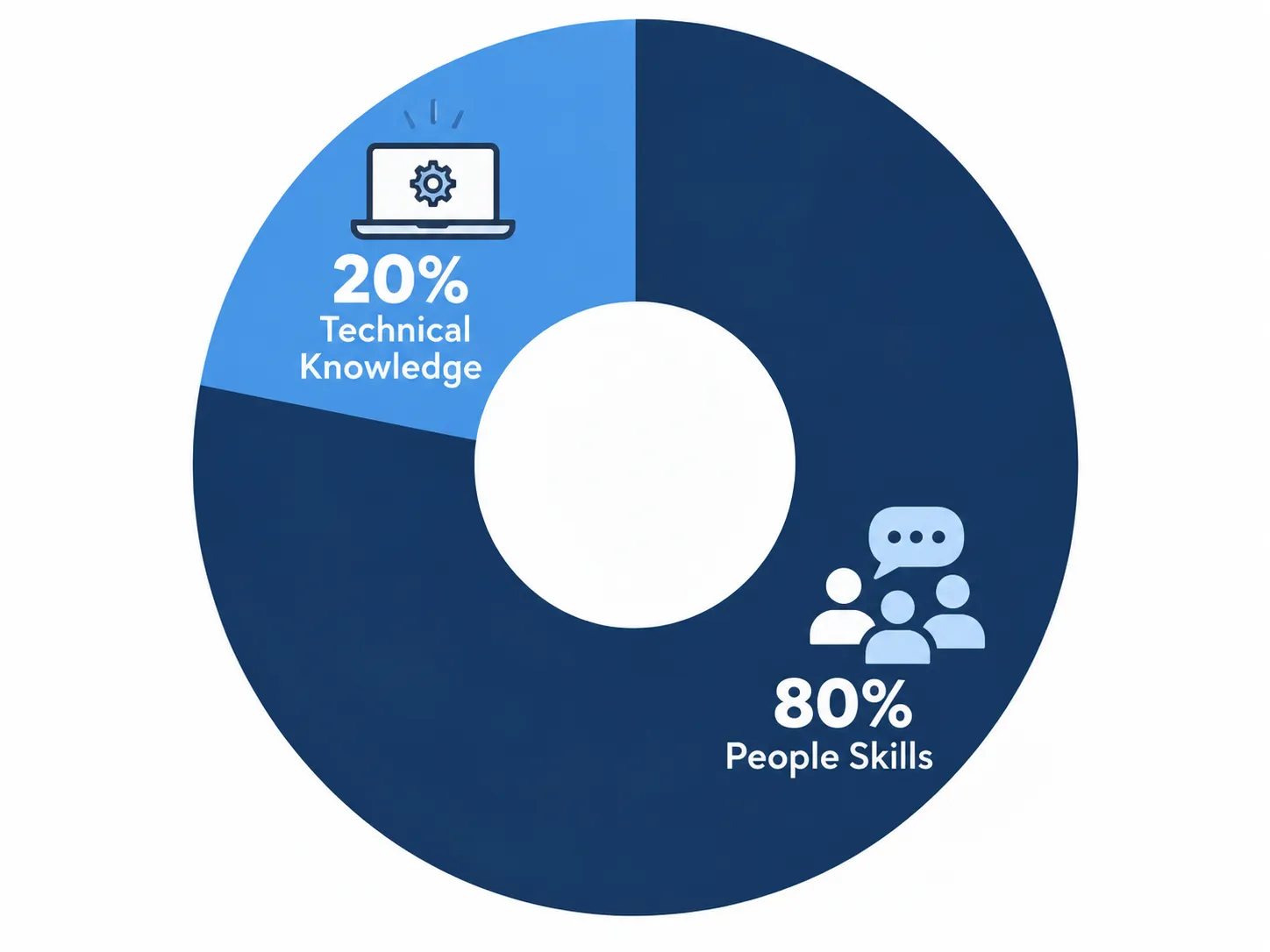
I’ve started to believe that working in tech is about 20% knowing the trade and 80% behavior and people.
How you listen. How you ask questions. How you follow through on what you said you’d do. Whether people trust you to understand their situation. Whether you can explain something technical to someone who isn’t technical without making them feel dumb.
That 20% still matters. You can’t fake it, and you have to keep learning, because the tools change constantly. But here’s the thing: AI is getting better at a lot of that 20% every month. It’s not getting better at the 80%.
It can’t build trust with a client over six months. It can’t read the room when a meeting is going sideways. It can’t notice that the person asking for help is actually stressed about something else entirely.
If you’re trying to figure out where you fit

If you’re worried about your place in tech right now, here’s what I’d say.
Keep learning the technical side. It’s your foundation. But don’t neglect the 80%. Practice asking better questions. Get comfortable talking to people who don’t speak your language. Pay attention to what’s behind a request, not just the request itself.
And if you’ve been assuming tech means coding or nothing, look around. There are a lot of ways to build a career here that play to people skills as much as technical ones.
The tools are going to keep changing. People are going to keep needing someone who actually understands them. That’s the part that doesn’t get automated.